Commercial Real Estate Mastery: Episode 42
How Do People Buy Inverted Cap Rates?


Everyone wants to make money in real estate, but it may seem puzzling when even private equity group buyers close on deals in which the cap rate is lower than the interest rate on the mortgage. In this Commercial Real Estate Mastery podcast we’re going to explore the strategies buyers use in these types of “inverted” deals and why they’re not as crazy as they look.
Episode 42: How Do People Buy Inverted Cap Rates? Transcript
We all like to think of ourselves as being fairly intelligent, that we know the ways of the world, that we understand how it all fits together, how all the gears work, how they're all intertwined. But one thing that comes up sometimes these days in real estate that makes your mind say, "No wait, how are they doing this?" Is when people buy cap rates lower than interest rates. And we call this concept inversion. This is Frank Rolfe for the Commercial Real Estate Mastery podcast. We're gonna talk about how people actually do inverted deals with cap rates lower than prevailing interest rates. And you see the transactions all the time, particularly in the mobile home park industry, but still in others, where the interest rate on the loan is 6.5%, but someone buys the property for 6 cap or 5.5 cap. And you can't help but think, "Now wait a minute, how are they making money on this again?" Because we're all classically trained that to make a 10% return, cash-on-cash return, you have to have a one-point spread where the cap rate is one point higher than the interest rate on the loan. And we know that if you can get a two-point spread, it's about a 15% cash-on-cash return, and a three-point spread gets you to over 20% cash-on-cash return, the very gold standard of investing.
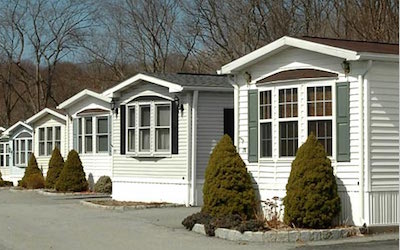
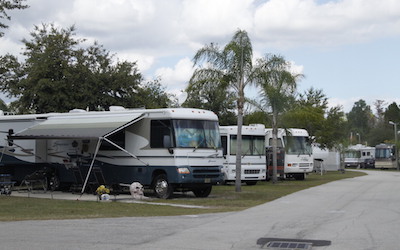
But how do you come to grips with situations where the cap rate is, in fact, lower than the interest rate? Because we also classically know that the reason you can, with a one-point, two-point, and three-point spread, hit and exceed 10% is using leverage as a tool. But when you buy with an interest rate that is higher than the cap rate, you have negative leverage, right? So you would think those returns would be even more greatly damaged. Well, here's how people are doing it. The first thing you have to do if you're gonna buy a property at an inverted cap rate is you have to find properties that you can significantly and quickly change the trajectory of the EBITDA nearly overnight. So what sectors can you go in and change occupancy and change rent level almost immediately? And the answer in most cases, mobile home parks and RV parks. Why is that? Well, you can buy an RV park from a mom-and-pop with absolutely no internet knowledge at an occupancy of 30% or 50% and then just get it on SEO, get it on Google, make the phone ring, make the appointments start happening, and next thing you know, you're at 90% virtually overnight. Mobile home parks have the same ability. You can buy a mobile home park at a lower occupancy, start bringing in mobile homes to fill vacant lots, and next thing you know, you're full.
Also, in the case of mobile home parks, typically the lot rents the mom-and-pop have set are ridiculously low with plenty of room to push up. And then there's the operational issues, manager overcompensation, water and sewer loss. These are again issues in mobile home parks that often the buyer can pretty rapidly fix. Nobody buying an inverted deal believes that the cap rate at closing will be the same cap rate a year from now or five years from now. If they did, they wouldn't buy it. But they're gonna go in and make projections and budgets showing how they can increase the EBITDA substantially. That's the first part of buying inverted deals. But the other part of buying inverted deals revolves around the interest rate. Now, right now, if you're gonna go out and get a loan on most commercial property, you're looking at interest rate that's somewhere in the 7% category, maybe even 8%, maybe as high as 10% based on the type of asset you're looking at buying. Totally out of favor things like retail centers and office properties and hotels, they get punished with interest rate because of the inherent risk. Lenders just don't wanna do those loans. It scares people to death. They don't wanna do it, so they're gonna charge a much higher interest rate. If you're in the housing sector though, which is mobile home parks and apartments, then you have the capability of getting a Fannie Freddie loan.
And what does that mean? Well, now that's a much more advantageous type of loan at a lower interest rate. But it only applies to housing. You can't get it in any other sector of real estate. And we know that historically, the interest rate on mortgages is not as high as they are right now. We came out of a period, a really long run, almost 20-plus years of low interest rates stemming from the Great Recession. When the economy blew up 2007, what happened? The Obama administration went in and manipulated the markets through quantitative easing and drove interest rates down almost to zero. But that was a one-off situation, you might say. I don't think the government can do it again right now or can't do it quite so much. Well, it may be true, but if you go all the way back to 1950, you'll see that in every recession since 1950, the interest rate typically declined between two and three points during recessions. So when many people are doing these deals that are inverted, what they are waiting for and assuming is we have a recession right around the corner. A lot of smart people think the next big recession will start, in fact, in 2027 after the midterm elections. Makes a lot of sense to me. Stocks have never been more overvalued and things have never been more screwed up. And it wouldn't take much to trigger an avalanche of pessimism resulting in what would be kind of styled kind of like the dot-com bust or even the Great Depression.
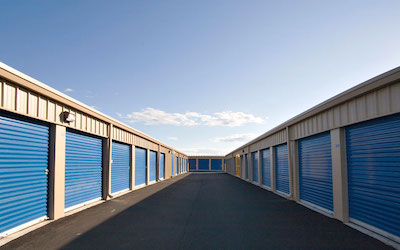
So, many of these buyers on the inversion side, they're assuming a recession is ahead, which will drop rates two or three points. What would that do for you then? Well, if you had a loan at seven, the interest rates might drop to five. If you bought that thing at a 6-cap and you did substantial changes to the EBITDA, now you have your three-point spread. That's how they're modeling things. It's a one-two punch. Punch number one, boosting NOI and EBITDA. Punch number two, lowering interest rates. Now you might say, "What if they're wrong? What if we don't have a crash in interest rates tomorrow? How will that work out?" Well, if you're in something with steady demand and solid numbers, you can just keep on pushing it. You can drive yourself out of your rut, even if you guessed wrong, interest rates don't decline. But you have to be in an industry where you can push the rents like that. Where can you do that? Self-storage? No way. They've got greater vacancy and dropping rents. Never in retail. The internet's killed that. It's killed office, it's killed hotel.
Basically, mobile home parks are the only thing out there where you can continually raise the rent due to the supply and demand malfunction of no new parks being built, tied with the ever greater need of affordable housing. But if you're in the right sector, in the right market, you should be able to power out even if people guess wrong in interest rates. But I don't think they're gonna be probably guessing wrong. Remember that in many forms of real estate, when you hit the opportune time, you can refinance and lock things on for a decade. Conduit lending allows you to go a decade. Fannie Mae, Freddie Mac debt allows you to go a decade. So what these buyers are doing is, even if we don't have the recession in 2027 but instead in 2028, they're betting it will be coming soon. And the moment it does, when their interest rates go down, they're gonna lock those rates. And they're gonna move those what are currently inverted spreads into very positive rates of return. This is Frank Rolfe with the Commercial Real Estate Mastery podcast. Hope you enjoyed this. Talk to you again soon.