Commercial Real Estate Mastery: Episode 8
How Much Leverage Is Right For You?


Real estate is all about financing and a big part of financing revolves around how much you put down on the deal. So what are the options and what makes them the right fit for you? In this Creative Real Estate Mastery podcast we’re going to review the various financing options from zero down to 100% down and what the strengths and weaknesses are of these levels of down payment. Leverage is a key way to make money with real estates, but it’s also a risk that you need to understand and manage.
Episode 8: How Much Leverage Is Right For You? Transcript
If you look up the definition of leverage, it's not that great a definition. What it says is the exertion of force by means of a lever or an object. But we all know what leverage means because we know what lever means. And we know that when you put a lever into a situation, if you have, for example, an old railroad car that had derailed back in the 1800s, the way they got the thing back up on the tracks, they got a bunch of guys and a bunch of long poles, and they put those poles underneath that railroad car or engine, and then they all pulled down on those poles at one time, and that would lift the thing back up. So what a lever does, it allows you, as a tool, to lift things that are bigger than you could normally handle in the absence of the lever. And leverage means nothing more than simply using that scientific principle and applying it. And in the case of real estate, when we talk about leverage, we're talking about debt, using debt, using mortgage money to lift bigger deals than we could afford to buy with cash. Now, in America, in most real estate transactions, people use a down payment of 20 to 30%, and a bank or other lending institution provides the rest of the money. And that's a very important item because what it allows you to do as an investor is to buy things that are out of your wheelhouse in size using the measured principles of leverage. But now most people, when faced with leverage, the first thing they wonder is, how much leverage should I use? That's always been the question in real estate from the very beginnings. If you look back at the very first American real estate millionaire, John Jacob Astor, back in the 1820s, 30s, 40s, he didn't use leverage because leverage didn't really exist back then. They didn't really have banks that made commercial real estate loans. You're talking about a guy that made a living selling beaver pelts, those kinds of items. So things are pretty crude back then. They didn't have banks with tellers and things like that, at least not the way we think of it today. So he bought his real estate for cash. But subsequent to that, pretty much every major real estate investor in America has used some form of debt, some form of leverage. Why would they do that? Well, because again, that lever allows you to buy bigger properties than you can on your own. But more importantly, it allows you to have a higher yield on your investment dollars.
Here's how it works. When you use leverage, let's say you go off and buy a property using 20% down, and you've got a fixed rate on that loan of 7%. If you can buy that property at a rate of return of 8%, then you're going to get a cash on cash return on your investment of about 10%, which is higher than you would if you'd bought it for cash. A couple points higher. If you can expand that leverage, if you can get a two-point spread, now we're talking a return that's in the teens. Now we're talking something really significant. In that example, if you'd bought that property with all cash, you would have gotten an 8% return. But if I apply leverage to it, 80% leverage, that simple act of leverage boosts that to a almost double rate, 15%. And if you can get even more distance there, if you can have between the interest rate on the loan and the cap rate on the property three points, you'll be in the 20% category. Now why is that important? Warren Buffett's lifetime batting average as an investor was 19.8% per year. So you can be your own Warren Buffett. You can hit the same numbers Warren Buffett hit if you can engineer how to get a 20% return. And the best way to do that is simply to utilize leverage and find a deal which has a three-point spread between the interest rate and the cap rate. Nothing, nothing more important than that. So clearly you might say, well, gosh, well, then leverage is great. I want as much leverage as I can get. Well, hold on there for a minute because leverage can also go in two directions. Direction number one, it's great when times are good and you've made a right investment, but the reverse is if you're wrong on your values, then that leverage can also drag you down. So it goes in both directions. So let's study each of those directions to try and figure out maybe what the middle ground might be. If you're going to buy things with all cash, you have a couple of huge problems. Number one, you will have the lowest rate of return of any different method to buy it. You're not using leverage at all. Also, if you don't use some form of debt, you don't really know that that property can hold debt later on.
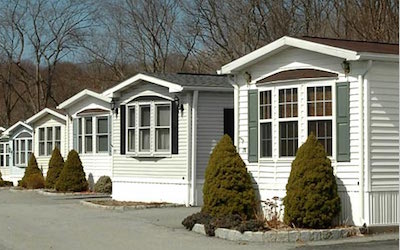
So as a result, you might buy something and think, well, down the road, I'm going to sell it or refinance it. And then when it's time to do it, you can't do it because there was some flaw in the property that you never caught and never had a bank in there to look through what you were doing to catch it for you. At the other end of the spectrum, you have zero down borrowing where you have no money in the deal at all. Now you might say, well, gosh, that seems insane. Well, not really. If you have a zero down loan, your rate of return is infinite because rates of return are based on the amount of money you put down and you put down none. So therefore, anything is off the charts. But that leads us to one rule when it comes to leverage. And that's the difference between recourse and non-recourse. If you have zero down on a non-recourse loan and if the deal goes bad, no one can come back after you for a penny of it. So as a result, you still look like a genius. You had infinite return with no downside. But that's not always the case in commercial real estate. Often, you have recourse. This means that if you fail to pay back the loan, the bank can come after you for the deficiency. So a lot of times when we think about leverage, we also must enter into the conversation the concept of recourse or non-recourse. If you deal in mobile home parks, for example, or multifamily, you have the ability to get Fannie Mae, Freddie Mac debt. And Fannie Freddie debt is a non-recourse transaction most of the time. So as a result, it's the right kind of leverage. Same with conduit lending, non-recourse. Seller financing, non-recourse. Bank debt is the one that's typically recourse.
So sometimes when you think about how much leverage is right for you, the question should be, okay, are we talking recourse or non-recourse? If it's non-recourse, you can go with a lot greater amount of leverage and still sleep at night than if it's recourse. And then you have, look at the REITs, Real Estate Investment Trust. We have REITs in America sold on the stock exchange in many different real estate sectors. And they typically utilize 50% loan to value. That is how much leverage they use is 50%. Because they feel that's a safe middle ground between high rates of leverage and rates that are too low. Now you will still not get the same higher returns at a 50% loan that you would at a 70 or 80% loan, but your downside is reduced. So the bottom line is when you're looking at leverage and how much leverage is right for you, you got to think a lot. You got to think about all the different aspects to that. Rarely is buying things for all cash the right thing for anyone. It greatly hinders your rates of return. It actually adds to your risk. But maybe 50% leverage is right for you. Maybe 60, maybe 70, maybe 80. And in some cases you might say, no, I'm going all the way. I'm trying to get 100%. It's a choice you have to make personally because as with all things investment, it relates to your personal goals and attributes. And we all have personal accountability in the end in the way we invest. But if you're afraid of leverage, if you say, I don't want to do leverage at all, you got to think through that again. Because it's really hard to hit the lofty numbers of the best investors in commercial real estate unless you utilize loans. This is Frank Rolfe. Hope you enjoyed this. Talk to you again soon.