Commercial Real Estate Mastery: Episode 33
The End Of Pretend


With $2 trillion of commercial real estate debt coming due, the commercial real estate lending community has hid of massive losses in the office, retail and lodging sectors using a strategy called “extend and pretend”. But recently many lenders have been abandoning this practice. In this Commercial Real Estate Mastery podcast we’re going to review why the lenders have changed their minds and what’s to come for distressed real estate and the impact on the macro industry.
Episode 33: The End Of Pretend Transcript
During just about every down cycle, a standard practice of most lenders was to do what's called extend and pretend on a troubled loan. On a troubled loan, the problem is you typically can't find a new bank to take that loan, nor does the bank really want to renew it. They don't want to enter into a new five or 10-year agreement on a property that is struggling just to make the payments every month. So under extend and pretend, what the bank does is it extends the expiration date of the loan and they pretend that everything will always work out well. The problem is right now that many of these lenders are no longer wanting to take that leap of faith. This is Frank Rolfe with the Commercial Real Estate Mastery podcast. We're gonna talk all about the end of pretend. So why are lenders starting to shy away from the common industry practice of the past of extend and pretend? Well, let's just first understand why they did that kind of thing to begin with. Why would you extend a loan that was coming due when you know there's problems in occupancy and rents and everything else? Why would you extend it? Well, the banks would typically extend them because they had this expectation that the market would improve, that the values would go back up, and therefore the borrower would be able to either sell the property or get it refinanced. But in office, retail, and hotel, in those three industries, the hope is pretty much diminished enormously.
In fact, for most lenders, the hope is seemingly over because they think, oh, well, the internet has ruined office. No one goes to the office anymore. They work remotely. No one goes to the store. They buy on Amazon or Walmart.com or any of those online retailers. And people don't use hotels anymore like they did because many people don't understand that most of the hotel's big money, the stuff they use to pay their bills, comes from corporations which hold events at hotels. That's the big money. Renting out the ballroom, renting out getting 500 dinners simultaneously. And a lot of your business travel has never returned. Some of the personal travel has in many markets. But if you look, just for example, at New Orleans, New Orleans is getting slaughtered when it comes to hotels because the conventions never came back. People just decided, oh, we don't want to hold those big conventions anymore. People can do the same thing on Zoom or we can do an email. So as a result, in those three sectors, people are saying, no, there's no hope, so why should we even bother? But in multifamily, which currently has a lot of distress, right now, 8% of all apartment loans are in distress. The apartment market still, despite its problems, people have hope and they think that if they just wait longer, the apartments will be okay. So let's take apartments out of the grouping of the end of extend and pretend because many lenders will still do extend and pretend on apartments.
They have a rosy, positive outlook of what will happen with a lot of these apartment deals. But the real trigger of the problem on the office, retail, and hotel side is not just that the lenders have lost hope. The problem is the borrower's lost the hope. That's the thing that no one expected. So a lot of these lenders, they probably would still do extend and pretend because despite the fact that office and hotel and retail occupancy is dreadful, and we all know it is, if you go to your local mall, how many of those storefronts are vacant? Just a ton of them. How many of the ones that aren't vacant are pop-up shops? People who aren't even really retailers trying to hawk some goofy thing they made out of their garage. So we know there's great weakness in those, but the problem is that the people who own those properties, they don't want to keep feeding them. They don't want to continue on with the negative cash flow. They figure they're gonna lose that office building in Manhattan anyway, so there's really no point to keep making the payments since it doesn't currently cover the payments. And as they've lost hope themselves in those things, in those assets, and stop making payments, the banks have no choice but to foreclose because they can't do extend and pretend if both parties don't believe in what they're doing. So as a result, you're suddenly seeing a lot of these properties being sold at massive losses. How bad?
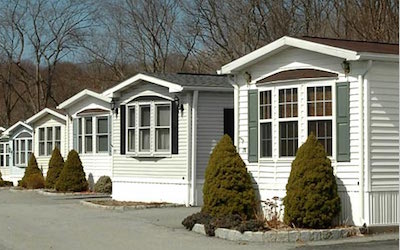
There have been single office buildings in Manhattan that have sold at losses of 200 million, $300 million. The largest office building in St. Louis, a million-square-foot building, the AT&T Tower, sold at auction not that long ago for $4 million. A million-square-foot building. To build that building would have cost probably $150 million, and now it's being sold for $4 million, and the bank is probably writing off $100 million over it. Those hurt. Those lenders are gonna be very, very unhappy now that they can't extend and pretend and they have to report on their financial statements these massive, crushing losses. So what's gonna happen when all this occurs? There's $2 trillion of loans coming due right now in commercial real estate, and pretty much all of your office and your retail and your hotel are not gonna be able to be renewed. So what happens when all of this hits the fan, when all of this hits the floor? Well, here's what you will see. First off, it will depend on what industry you're in. If you are in something related to housing, apartments or mobile home parks, you're not gonna see a whole big change because most of that lending is Fannie Mae, Freddie Mac. They don't do office or hotel or retail or anything other than basically apartments and mobile home parks. And since they believe in those loans and those loans are going fine, mobile home park defaults right now are under 1%, it's the strongest of all real estate categories. They're not going away because they're doing just dandy.
So a lot of the distress in commercial real estate will not be felt in the housing side, but in the office, retail, hotel, to some degree self-storage, commercial buildings, their tale will be different. As the lenders acknowledge these massive losses and write these things down, they will begin a process which is called flight to quality. Now, what flight to quality means is they realize that most of their defaulting loans come from things that were marginal, locations that were marginal. There're still office locations in America that are booming, in fact. Office buildings on the Upper East Side in New York City are seeing growing rent and occupancy. So it's not like everything is in the toilet, but the lesser properties with the lesser locations in those real estate sectors are. And they're not gonna want to carry those loans any longer, nor will they want to originate new loans. So if you're investing in office or retail or lodging or any of these sectors that are having trouble, it's paramount that you not buy marginal property. You've gotta buy the better quality stuff, the stuff that you know will stay occupied with great locations, good solid prices. That is the key, and that you'll just have to camp out and wait until the cycle turns, because all these real estate cycles and lending cycles always seem to go in a cycle. They go up and they go down and then they repeat.
However, the spooky part about this collapse is I don't know for a fact that office, retail, and lodging will in fact ever recover. Because Americans have come up with a new way that they live their life regarding those aspects. I don't see ever it cycling back that people stop buying things on Amazon, stop buying things from Walmart. It's delivered to your door. You don't have to cart it out of the store. There's no gasoline costs. There's no time lost. I just don't think it's gonna come back. I don't believe that offices are ever again gonna be full. I don't think that the average American is ever gonna go like they did before and sit in an office all day. Just don't see it happening. So I'm not sure what you're seeing is truly cyclical. Now, the properties that go bad in those sectors, they deserve to go bad because whoever bought them and ran them, they either weren't staying in tune with what was going on with technology or they were in markets that were too marginal to begin with. But flight to quality is probably the key term going forward as the end of the extend and pretend era starts to take shape, with the exception of housing, mobile home parks, and apartments, which will remain fairly much unfazed. This is Frank Rolfe, the Commercial Real Estate Mastery podcast. Hope you enjoyed this. Talk to you again soon.