Commercial Real Estate Mastery: Episode 10
The Sum Of All Real Estate Cycles


Real estate revolves around some well-established and predictable cycles that can shape your returns and proper selection of which niche of commercial property to invest in. In this Commercial Real Estate Mastery podcast we’re going to review these cycles and how they relate to your investing options.
Episode 10: The Sum Of All Real Estate Cycles Transcript
Real estate runs in cycles, it always has. And your understanding of those cycles and where you fit into the cycle currently can have a huge impact on how well you do in your real estate investing career. This is Frank Rolfe with the Commercial Real Estate Mastery Podcast. We're going to talk about the sum of all current real estate cycles, not just one cycle, but we're gonna look at all of the cycles to try and figure out what they all mean, where they all interconnect, what it all should give you as a summary of what you need to be doing as far as investing in commercial real estate. So let's start off with why we have cycles. It seems to be human nature that all of us over time tend to overcorrect. And typically that overcorrection leads to some kind of ending where we have a crash which returns us to ground zero. So we have this boom, we kind of go up on the Ferris wheel. And then we have this correction that comes down and then we return back to the starting spot. And when you're investing in commercial real estate, you want to ride it up, but you don't want to ride it down, right?
It's really no different than stocks, it's just a matter of timing. So let's start off with the first, which is maybe one of the biggest cycles in real estate and that is the economy. And since the founding of America, our economy has gone in roughly a seven-year cycle from boom to bust to reset. We have this seven-year cycle, and let's just look at it historically. We had the dot-com bust that happened in the year 2000. Things then recovered only to collapse again in the 2007 Great Recession. And if you went backwards from the dot-com bust, if we take seven years off of that, it takes us back to about 1991, '92 era, that's when we had the recession before that. But we haven't had a recession since 2007 and that's just plain weird. We were supposed to have one in 2014 and then another one in 2021 and we missed both. Now why is that? Well, you can't get away from cycles. So what's going to happen is when we have a down-cycle, it's going to be a doozy because we've had such a prolonged up-cycle.
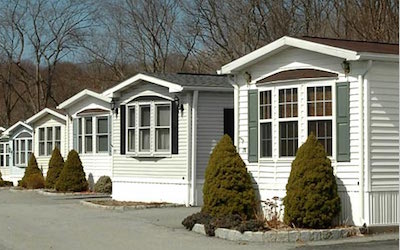
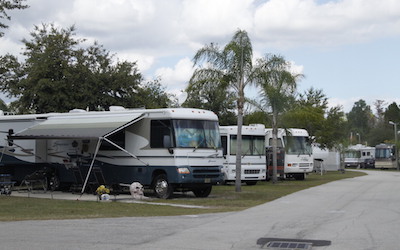
And 2026, that may be the year of the down-cycle, we don't know. We don't know when things will crash. If you look at the newspaper headlines right before the Great Depression hit in 1929, they were all very rosy, they were all very positive, optimistic, things couldn't be any better. So none of us can really predict when things go down. But at this point in the movie we're more likely to have the down-cycle than the up. So think about niches of real estate that do well when things are doing poorly. Probably the first observation from that juncture would be mobile home parks because they're contrarian. When the world is doing badly, people need to find cheaper places to live. They're literally the Dollar Tree of the housing market. So that's one that does well. RV parks do well because most people who live and use RVs are retired and they don't really care about the economy because they don't have real jobs. They live off pensions and Social Security and that type of thing. So there's another one that's a little bit contrarian, a little bit immune to recessions. But think through, when you're looking at real estate niches, think through, okay, what would this thing do in a bust?
Because there's a whole lot of them that do terrible. Shopping malls, office buildings, hotels, they get crushed in bad times. So think through that cycle and how things fit with what you're looking at. And then you have the interest rate cycle. Now interest rates in America run in 10-year cycles, that's how that works. So if you look at the most recent cycle, we bottomed in 2021. That means we won't bottom again until 2031. So from an interest rate perspective right now, rates that you're seeing are not nearly as low as they can go. Now the good news is they're on the way down and not the way up. So this is a good time to buy real estate because when interest rates go down, so do cap rates, and when cap rates go down, values go up. So this is actually an excellent time to be buying based on the interest rate cycle. Then we have the overbuilding cycle. This is an 18.6-year cycle. Now the start of the most recent cycle is 2023.
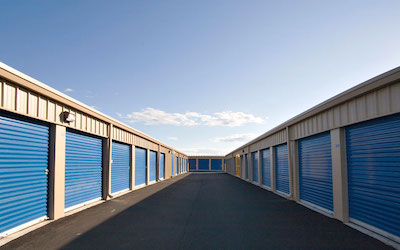
So that means if you want to know when we'll be on the part where things are getting better, that's not going to happen until 2033. So that's when you will hit the first half of the cycle. So from an overbuilding perspective, we have a lot of overbuilding we have to work through in the real estate industry. Giant amounts of self-storage are overbuilt, a lot of multi-family has now been overbuilt. And we all know that retail and office just can't get a break. It's inherently overbuilt because no one really needs it anymore, which we'll talk about in a minute. So think through niches that don't overbuild, things that are restricted by permitting, so you can't overbuild. One of them right now is outdoor industrial storage. What that's all about is people who are building these giant projects, like these big techno-centers for the AI industry. They have nowhere to put their construction equipment. And getting permits for that outdoor storage, that's very hard to get. Mobile home parks, you can't build any new ones simply because they won't allow you to. They haven't allowed new mobile home parks to be built in America really, since the 1970s.
But think through your niche and think what's the impact of overbuilding? Am I immune to overbuilding? Then you got your population shifts. Now, population shifts take a long time to occur. Baby boomers have dominated America for decades. If you were born between 1946 and 1964, you're a baby boomer. But here are some stats you may not know. In 2019, millennials, for the first time ever, outnumbered baby boomers. And in 2024, for the first time ever, Generation Z outnumbered baby boomers. So America's gone from majority old to majority young, that's a really big shift. And what that means is, think about real estate niches that appeal more to youth. What would those be? Would it be micro apartments? Would it be new types of retail, things like Topgolf? What's going on there as we change from an older America to a younger America? And then you have obsolescence. Now, obsolescence, other than population is one of the oldest, hardest, longest cycles in all of real estate. The average cycle for obsolescence is 30 years. So it means it typically takes a prime retail corner shopping center 30 years to no longer be considered that good.
It takes 30 years for a new, glossy, glamorous office building to be considered not that great anymore. It takes 30 years for that brand new, beautiful apartment complex to simply be a rundown Class B complex. So when you're looking at real estate, you always have to think about obsolescence, will this thing still be hot and important in the future? And steer clear of niches where that's not true. Now, a good example is a mobile home park, because a mobile home park only rents out the land to the mobile homes, so it can't be obsolete. RV parks are the same, the cars come and go. A parking lot in downtown cannot be obsolete because cars come and go, although on that one it can become obsolete if people don't go downtown to work anymore, or if everyone just starts driving hovercraft or Uber vehicles. Every form of real estate, without exception, must face, just as all of us do the very fact that death is imminent, obsolescence is also imminent. When you build a new building, whenever you do, over time, consumer tastes change, things kind of time out and they get old and we must be aware of that. So when you add all those cycles together, what does it mean? A, it's a really good time to buy commercial real estate because the interest rate cycle right now is very favorable to real estate.
At the same time, be very careful of the economy and the pending recession. Do not get involved in niches that don't do well when times are bad. Try and stay clear of things that are overbuilt because overbuilding leads to lower rents and lower occupancy. Look at things that are more centered on youthful Americans more than older Americans. And always remember that whatever you're looking at, no matter how hot it today, one day it will become less hot, it will become more obsolete. This is Frank Rolfe with the Commercial Real Estate Mastery Podcast. Hope you enjoyed this. Talk to you again soon.