Commercial Real Estate Mastery: Episode 12
Understanding Rent Control Risk


If you are looking at investing in the rental housing market, a primary concern in today’s politically divisive America is the potential for rent control. In this Commercial Real Estate Mastery podcast we’re going to review how to tell if a market could have a problem with rent control in the future as well as methods to mitigate the damage if rent control is pending.
Episode 12: Understanding Rent Control Risk Transcript
Housing is the hot sector in commercial real estate right now, and it will be for years to come. The single-family home price in America is about 400,000. The average apartment rent is about $2,000 a month. And housing is something everyone has to have. It's not a luxury, it's a necessity. But there's one thing out there that can cause all kinds of problems when you do housing investment, and that's the concept of rent control. This is Frank Rolfe with the Commercial Real Estate Mastery Podcast. We're going to explore rent control: How it works, what it means, how to predict if a state you're looking at might be susceptible to it in the future.
Now, rent control as a concept that dates all the way back to World War I. What happened is the soldiers were returning from the war at the end of World War I, and they couldn't find housing and the rents were crazy. So, someone had the bright idea, you know what, let's go ahead and put a cap on how much you can raise the rents, because all these poor soldiers can't find housing. So, we need rent control as a control mechanism to keep landlords from being ridiculous on their rents. And not that many states signed on to this concept. Many states said, Look, these guys returning from the war, that's a temporary blip. Let's let the free market dictate what happens with that. But a few states, they went ahead and enacted rent control. And since that time, over the ensuing century, very few states still got on the rent control bandwagon.
Today, there's only about seven states out of the 50 that have rent control. But yet we've seen a couple recently. We've seen Oregon and Washington join the fold, New York joined the fold. And seemingly, it sounds like it could be something, a disease that might filter into many of the other states. But let's put a little science on that concept, because the problem with rent control that many people don't realize is it in many states would require undoing statewide rules, laws that do not allow rent control. It's not like most states have a neutral position. Even states like Illinois, which is today very Democratic, it has a statewide ban on rent control. So, if you want to enact rent control in a state, in most of the remaining states, we would have to undo the law blocking rent control.
And then you have the issue of how you enforce rent control. It's very expensive. I think the current estimate is to administer rent control in even a small market, cost between $100,000 and $200,000 a year, as far as inspectors and groups and committees and boards to determine what rents could be and to hear objections when people are claimed to have raised the rents too much. And at a time right now in America where everyone's broke: City government, state government, federal government, the idea of packing on a whole lot more additional cost and not very popular, but unfortunately, that's how rent control works is it costs money out of pocket to administer it. So, when the city says, Hey, I think I want to do rent control, what they're saying is, Hey, I want to spend another $200,000, $300,000, $400,000 doing this. And most of them don't really have that money to spend. It's not like they're awash in money because they're not.
So, now let's focus on what it takes to enact rent control. Well, the first fact is there has never been a state in American history that has enacted rent control unless it was trifecta blue. It has to have a Democratic governor, state senate, and state house. Any one branch that's red. It has always failed. There has never been an exception in over 100 years. The most recent states like Washington, which enacted rent control, trifecta blue, Oregon, trifecta blue, New York, trifecta blue. So, we have to have that blue trifecta structure. If you're looking at investing in a state that does not have it, if at least one branch of the state government is Republican-held and you believe it will stay that way, then the odds are very good rate control will never even be a topic you have to worry about. Now, it may be introduced in Pennsylvania, they introduced it last year, but it never went anywhere. Because even though Josh Shapiro, the governor, is blue and the state Senate of Pennsylvania is blue, the state house is very dependably red. And even though the House proposed rent control and sent it to the Senate, I'm sorry to... Yes to the Senate, they never touched it. They never even brought it up as something to talk about. And it's been seven or eight months now. It's clearly a dead issue there.
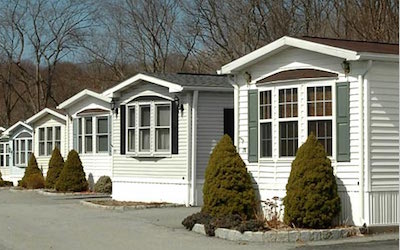
So once again, trifecta blue is essential if you're going to have rent control. The next problem is you have to realize there's a very large lobby that fights rent control. Because if you have rent control, it's going to impact the single-family home rental market, it's going to impact apartments, it's going to impact mobile home parks, it's going to impact anything that relates to housing Americans. And those are some pretty big lobbies. The mobile home park lobby isn't very big. But the apartment lobby is massive, and with so many private equity groups now in the BTR, Build to Rent space, that lobby is also enormous. So you have a lot of political clout within those lobbies to try and block rent control. And then you have the structure of who really benefits from rent control to begin with versus who finds it a huge detriment. And in many states, let's look at Illinois for an example. Many of the largest figures that fund these politicians are real estate people. And in Chicago, many of them are the largest owners of all of those thousands and thousands of apartment units. They are never, ever going to want anyone to pass rent control.
And since they've got most of the politicians in their back pocket through political donations, it's very unlikely that that would ever occur. Even in trifecta blue states, you're seeing a bit of a revolution of people who don't want rent control. It was passed in Colorado in both the House and Senate but vetoed by the governor. And that governor is as blue as you can get. Why would he have done that? He said at the time, if we pass this, it will destroy Colorado's real estate market. It's a big part of our economy, and I don't want to do it. But in a state like Washington, all the leaders in Washington are basically tied in with tech. They aren't real estate people, they're things like Nike. They could care less about rent control. They might be big advocates of it. So, the actual internal construction of the state's economy also has something to do with rent control.
Now, what happens if rent control is enacted in a state that you own property in? Well, the minute you see the rent control is a coming, the first thing you would want to do is to raise your rents to full market levels. Because traditionally, rent control only controls things going forward, but never backwards. And that's one of the problems with rent control, among many others, is that when you talk about it, it makes rents go up faster. That's been true in any state that's ever chatted about it, just by the mere mention of it, it makes rents go up. And of course, the reasons against rent control are numerous. Number one, when you have rent control, people will no longer invest in their properties because they can't get any money back from what they invest.
So, if you've got a big apartment building that needs a new roof, you're probably not going to put one on. You're probably going to keep patching it forever. You're just going to put an endless neglect on the property. Because you'll say, Well, I can't put any more money in it because they're restricting how much money I can get back. I don't want to invest money at 1% return, something like that. The other problem is it stifles new construction. People tend to abandon areas with rent control because if you're building something, that's the last thing you want to get involved in. Over in Minnesota, Minneapolis passed rent control quietly a while back, and then they kind of repealed it quietly because they found that all the projects that were going to be built in Minneapolis were scuttled. In fact, many of the developers moved it to St. Paul, which did not have rent control. And the city fathers, realizing it was going to be the death of their real estate industry, they panicked and said, Oh, we were just kidding. We never thought about that aspect. Yeah, yeah, okay. Rent control, no, no, we're not doing that after all.
Now it makes complete sense as an investor to understand all the risks. That's absolutely for sure. And there's no question in the world of housing, one of those risks is rent control. But there are scientific metrics to its enactment that you can watch and learn from. You can learn in due diligence, in fact, really what the odds are of it occurring. It's not a given that it's going to happen. There are certain things you have to have for it to even originate, like being trifecta blue. But you can learn and understand these with good, thorough, due diligence.
This is Frank Rolfe with the commercial Real Estate Mastery Podcast. Hope you enjoyed this. Talk to you again soon.