Commercial Real Estate Mastery: Episode 14
Wealth And Habit


John Jacob Astor was America’s first millionaire and he made it all in commercial real estate. He was also a man of few words and a firm believer in the power of habits. In this Commercial Real Estate Mastery podcast we’re going to explore the meaning behind Astor’s strict adherence to habits and how you can use that power to create wealth.
Episode 14: Wealth And Habit Transcript
John Jacob Astor was a mythical figure in American real estate because he was the first real estate millionaire ever. He attained that back in the old and olden days of the early 1800s. And he's someone we can all today, even though hundreds of years later, learn from some of his examples. This is Frank Rolfe with the Commercial Real Estate Mastery Podcast. We're gonna look at the habits that Astor believed that investors should have to succeed in the world of American real estate. And Astor didn't talk a lot. And this is back in a period in the early 1800s, we didn't have things like podcasts. There weren't a lot of newspapers. Obviously, there was no social media at all. And he just didn't like to talk. So finding quotes from Astor are few and far between. But one of his quotes is that wealth is largely the result of habit. So what was Astor talking about? How did habit make him into the first American real estate millionaire? Well, first, we have to unlock the story of Astor. So Astor was a guy that was originally a fur trader. He went out in the American wilderness, and he basically traded money for mostly beaver pelts from American Indians.
And then he took the beaver fur and he made hats out of it. That was really the income driver that created the cash flow he needed to buy real estate, were beaver hats. That was a big, hot commodity back in the late 1700s and early 1800s. And if he'd just been focused on that and nothing more, we wouldn't even know his story, because, of course, his taste changed over time. People didn't really buy hats that much. So he would have basically eventually fallen into bankruptcy, or we would never know. He would be a completely anonymous person in American history. But instead, he took the cash flow from those hats and started to buy property. And of course, one of his big success stories was that he personally owned most of Manhattan Island in New York. But here are some of the habits that allowed him to go from trading for beaver pelts with the American Indians into being America's first real estate millionaire. One of his theories was, you only buy land and you never, ever build or buy improvements on the land, because Astor wanted a simple, no frills, passive income stream. So if someone said to Astor, hey, I wanna have a house on this piece of land, he would say, well, then build a house on the land.
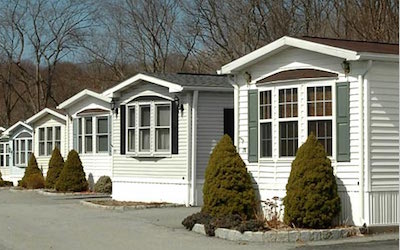
Just pay me rent for the land, and I don't care what you build on it. And you got to remember, back in the 1800s, people didn't build the elaborate houses they do today. They didn't build like three story mansions, they didn't put in concrete foundations. They were mostly kind of shacks made out of frame on dirt. And as a result, many of the people that would buy or... Rent not buy. Rent the land from Astor, would build these structures, even though he might have a lease on that land for 10 years or 20 years. Because, you know, houses were not something that you had to have a long term commitment for. So if you really wanted to follow that first item of Astor's habit, which was that he never got involved in the buildings, you would need to look at real estate niches like mobile home parks or RV parks, something in which you are just in the land business. Because Astor did not like improvements on top of the land. Also, Astor liked the habit of not buying things in town. He liked buying them on the fringes of town and letting the town grow out to meet his property, which would then enhance the value.
He realized that he could buy things cheap, not being in the center of Manhattan, but being on the fringes of Manhattan. So he kept buying up land like an amoeba, farther and farther from the center and just waited for Manhattan to expand out to him. And that's really true in all real estate niches today. It doesn't matter which one you wanna go into. When you can buy property in the path of growth, you always come out looking like a winner. Because as that town continues to grow, real estate values continue to go up. Another item that Astor saw as a habit was, he was constantly reinvesting his profits. Now, in his case, he would constantly buy more land in Manhattan. But it's true of all real estate investors. If you look at most people who've done enormously well in the industry, they keep expanding their holdings. Maybe they have one single rent house, but then what do they do? Over time, they buy another one and then another one, and then another one. If you look at most people who've done well in real estate, people who've amassed large fortunes, 50 million, 100 million plus, it all boils down to one initial property.
But instead of spending all the money from that property, they started buying more properties. And then Astor was no different. That's exactly what he did. Also, Astor felt as a habit, you never should relax your standards. You see, Astor never deviated from his business model. He only bought land, and he only bought land outside the city limits and let the city grow out to him. And he always reinvested his money in that land. And he would never deviate from the plan. A lot of people get soft over time. They lose their determination, they take an easier path. But Astor never did. Astor did the same thing over and over, and he never made any exceptions. He never relaxed his standards at all. Also, Astor was not afraid of taking the habit of calculated risk, but not being reckless about it. And, of course, that goes back to his days on the American prairie, trading with American Indians, which was kind of a dangerous thing to do, going out there back then, you had the regular issues of danger coupled with the fact there was no health care. So effectively, if anything happened to you, if you had an appendicitis, you broke your arm, it could be fatal.
But he knew he had to go out there and do risky things to get ahead. So even though, over time people thought he was very stable business person, because he always seemed to do the same thing over and over, he didn't mind sticking his neck out to a certain degree. So one of his habits was, that he would take calculated risk. He didn't like to, obviously, he would prefer not to. All of us would. But he realized that to make progress, he basically had to stick his neck out. Now, if you look at the habits of Astor, you know, probably the one that stands out the most, the one that is above all others, is simply the simple fact that he really had an understanding of the mechanics of how everything worked together. So he knew that if he stuck with his plan, over time, his real estate holdings would grow in value, and as he kept reinvesting, the money would just kind of grow exponentially. And if you're gonna be a good real estate investor, you got to be able to look at the world as a whole and realize where the trends are.
Because Astor knew that one day Manhattan would be something, others weren't that sure. If they were, they would have bought more land. But Astor felt very strongly, if you look back at his writings, that Manhattan would one day be the most important city in America as far as he was concerned. So whatever niche of real estate you wanna venture into, I don't care if it's apartments or single family homes or mobile home parks or office or retail, it doesn't matter. But you have to truly believe in your heart that that's going to be the next big thing, that that's where all the megatrends are pointing. If you look at America right now, there are so many different megatrends.
These are big seismic changes in consumer taste that some things are gonna get better and others are not. Retail, for example, has been enormously challenged by the advent of the Internet, very few people go to brick and mortar stores anymore. You recently had Saks Fifth Avenue, and even Marcus even declared bankruptcy. But if you have a vision, if you think, well, everyone's wrong, retail will come back, well, then maybe you should be a retail investor. But you have to go with your hunches. You have to go with big things that you can truly make a commitment on, because that's part of what separated Astor from others was, he was all in. He was determined to be successful, and he trusted his intuition, his gut instinct. This is Frank Rolfe with the Commercial Real Estate Mastery Podcast. Hope you enjoyed this. Talk to you again soon.