Commercial Real Estate Mastery: Episode 46
In Search of The Big Offset


No real estate deal is perfect. But when you have weak spots on a potential purchase, it’s vital that you have extraordinary factors to counter-balance them. In this Commercial Real Estate Mastery podcast we’re going to explore what those big positive offsets can be in a deal.
Episode 46: In Search of The Big Offset Transcript
There really is no perfect real estate deal. People thought The Plaza Hotel was the perfect hotel, but later went into bankruptcy. I know someone who was there recently. They weren't that impressed with it. Over the time, it just lost its allure. And that's the problem with most things in life. You can never find the thing that is just perfect. There's always something else drawing it down from being in that perfect category. But when you find deals, commercial real estate deals with those flaws in them, that's not the end of the deal, but you have to find a corresponding big offset. This is Frank Rolfe, the "Commercial Real Estate Mastery Podcast." We're going to talk about what that offset would need to be.
Now, think of the scales of justice. You have the woman blindfolded holding the two scales, and the key is that's kind of like when you're looking at a commercial real estate deal. Let's assume one scale is the scale of you want to buy it, it's compelling, and the other scale is the scale of now you don't want to touch it.
So, you say the scales start out level, and then the one bad thing pops up, and that scale goes down with the weight of the negativity of that. I need something now amazing to put in the other scale to push it back up again. And I call that the offset, the big good thing. So, what kind of big good things are there in commercial real estate? What could it be?
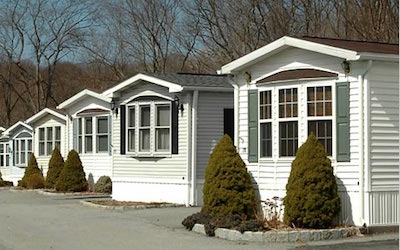
Well, one good thing, big good thing, is to get zero down coupled with seller financing. One of my first big commercial real estate deals was a mobile home park down in Dallas called Glenhaven, and the guy sold it to me for only 2.5% down. That's nothing. It was $10,000 on a $400,000 transaction, and he would carry the paper on it. Didn't have to get a bank loan.
That's a big offset. When you can find a situation where the seller will carry the financing, particularly with a small amount down, that's huge. In a similar vein, even if you can't get a low amount down, even if it's just your old customary 20% or 30% down leverage like you get on most real estate deals, if that guy is going to carry that loan for a long period of time at a low interest rate, say, 10 to 30 years, and let's assume he's willing to do it right now at 4% when banks are often at 7% or 8%, that's a huge offset. That's an incredibly positive thing.
But what else is there besides financing? What else could you do that's a big offset to make the average commercial real estate deal, which suddenly has a flaw, still be compelling to buy? Well, one would be an insanely low price. Now, we once bought a mobile home park over in Illinois, fully developed, roads, city water, city sewer, concrete parking pad, the whole deal. Permit, license, everything. Even had a clubhouse, big clubhouse, masonry clubhouse. We got the thing for $5,000 a lot. Now, the park was a total pit.
It had lots of things we needed to do to it. This mom and pop had run it horribly. They ran it into the ground. They hadn't mowed the grass. They hadn't trimmed the trees. So, we had a lot of things we had to do to it, and that added a little more capital on. But nevertheless, $5,000 wouldn't even buy you those concrete parking pads.
So, I was buying this thing at a fraction of construction cost. Construction cost on that park was probably $25,000 a lot plus land, and here I am buying that whole thing for $5,000 a space. So, when you can find deals at exceptionally low prices, once again, that is a huge offset. Or maybe you have the ability to push the rents up by a lot.
That could also be a huge offset. We once bought a mobile home park down in Austin. On one side of the street was the park that we were buying, on the opposite side was another mobile home park, and its rents were twice as much. This mom and pop had stupidly not raised their rents in years and years and years, and when they raised them, it was trivial, like $10. So, as a result, they were running about half of market rent.
Now, what does that mean? It means if you buy that property, you can double the rent in this case. Double the rent means doubling the net income, which means doubling the value of the property. Literally, just by raising rent, you can make millions of dollars with that property. That is a huge offset. That is going to make you want to buy it.
Or what if you're looking at a property where there's a major development going in near to it? Now, in a lot of parts of America, growth is very, very slow. If you're looking at a property out in rural Pennsylvania, there's probably not a lot going on. But sometimes, in other areas, particularly areas that are right on the cusp of being something, they're like a what they call micropolitan area, which means they're just under 50,000 population, about to become metropolitan, and sometimes they score big deals because their chamber of commerce is out there beating the streets trying to grow that town. And let's assume now suddenly there's a new highway going in or a big shopping center, big entertainment complex. What's that do to the value of everything? It's enormous.
We once bought a property on State Avenue in Kansas City, Kansas. It probably doesn't mean much to you, but just down the street, they were building the Legends Speedway, a NASCAR track. And along with the NASCAR track, what else happened down there? Oh, let me think about it. Million-square-foot mall went in. Great Wolf Lodge with indoor waterpark went in.
Just pretty much everything went in, and right now, you know what's going in there now? The Chiefs' new stadium in Kansas City is going in. Those kinds of big developments, huge offset. You buy a property like that with that kind of thing going on, and holy moly, you're buying something that has got an amazing future to it. Huge offset.
Also, if you're looking at a property that has remarkably low operating cost, in the mobile home park arena, it would be perhaps that the city owns the streets, they own the water and the sewer system. That's a huge plus because when you get a park or a property of any type that has lots of new infrastructure work completed to it, that's a big offset because that's money you don't have to put into it down the road.
Bottom line to it is the big offset, just like the problem, have to be mapped out. They have to be graphed out. They have to be looked at mathematically. Problems are not all in the same vein. There's minor problems, and then there's huge problems. There's some problems you shouldn't even touch. You should never buy a commercial property that has an invalid permit or license or environmentally contaminated or a fatal survey flaw or a clouded title. You would never want to buy those things, ever.
There's no offset that would ever make that attractive. But a lot of other deals, the problems that come up that you find in due diligence are things that are not truly deal killer by nature, but are just basically regular problems. In fact, Kaiser, the steel magnate, once said that problems are only opportunities in work clothes, and that's often true. You can often take the problems that you find in commercial real estate and use that as a negotiating tool, as a lever to get the price reduced.
So a problem that's not fatal can actually help a deal become compelling. When you find the problem, you can go to the seller and say, "I need a lower price. I need seller financing." Those things all lead to that huge offset. So when you find problems, don't give up on deals. That's what losers do. That's what weak people do. They just give up on everything. You need to be more creative. You need to say, "What do I do to make this deal work?"
And with that kind of attitude, with creativity, when you're willing to really, really work the situation, if you go out there and really, really are persistent and creative and make things happen, you can often create that big offset to make that deal compelling. This is Frank Rolfe, the "Commercial Real Estate Mastery" podcast. Hope you enjoyed this. Talk to you again soon.