
Commercial Real Estate Mastery: Episode 45
The Topic Nobody Will Talk About


There’s one topic so scary, so horrible, that nobody ever talks about it. But it was a part of life for Americans for half a century and has a strong chance for returning in the years ahead. In this Commercial Real Estate Mastery podcast we’re going to shed some light on the one topic that nobody else will mention.
Episode 45: The Topic Nobody Will Talk About Transcript
The subject I'm about to talk about is going to scare you. I don't mean to scare you. What I mean to do, though, is teach you something you're probably unaware of because you wouldn't know about it unless you were as old as me. I'm 65. I'm a baby boomer, but I had parents and grandparents and I learned about the shocking fact from them in conversation many, many years ago. But anyone who's younger than me may not have had any relatives to tell them about this simple fact. And when I tell it to you, your mouth will go open.
This is Frank Rolfe with the Commercial Real Estate Mastery Podcast. I'm gonna talk about the American tax rate. Now, in 1913, when they brought out income tax, the original tax rate for Americans was 7%. I'm sure we would all agree today, my God, I wish 7% was still it. That would be terrific. But by 1932, when the Great Depression was roaring forward, they raised that rate up to 63%. And they did so saying, "Don't worry, don't worry, we're in the Depression. This is kind of temporary. We'll figure this all out later when we save the country." But then by 1942, a decade later, it had grown to 94%. So the top tax rate in America in 1942 was 94%. So if you made $100,000 in 1942, how much did you get to keep? 6,000 bucks. And it stayed that way at 94% for 23 straight years, all the way until 1965. And it was still at 70% at the top tax rate by 1981. And then in 1982, Reagan started to lower taxes. That was one big focus of his administration, was lower the tax down. But he only got it down to 50%. That's how high it was. To pay the bills in the government, they weren't able to go any lower than 50% by the time he left office.
But now today, it's all the way down to 37% and we all think, "Well, gosh darn it, taxes aren't that bad." Well, the problem is, what if they start going back the other direction? Remember that they were up in the 94% category far longer than they've been as low as they are now. Historically, you had decades and decades and decades of run, half a century of taxes that were more than twice the current rate. And here's the dilemma. The dilemma right now is our current tax rates aren't covering it. We have a huge deficit in America, $1.8 trillion this coming year, because we do not bring in enough money by tax to cover the government's bills. And on top of that, we have $40 trillion of debt right now and growing every day. And the interest rate on that loan, if the rates even just stay where they are right now, because you gotta remember the 10-year Treasury is now up to 5%. The tax on that 40 trillion loan, I mean, the interest is gonna be about 2 trillion a year. This wipes everything out. It means we'll have to ultimately... If we're gonna try and balance things, we'll have to get rid of defense or get rid of Social Security.
And then remember that 40% of Americans right now identify as socialist. They no longer like capitalism. They think the money needs to be taken away from those who make lots of money. And the problem with a democracy is that when people who don't make any money realize that they can vote as a collective group and outvote those who do make money, then they can just take everyone's money away. And they already know the roadmap from how it was for 50, 60 straight years. It's with super high taxation, because people want everything today to be free. And the best way to get it free is for the government to pay for it. And the only way the government can pay for it is to take all the money away from those who actually make money.
So I'm assuming that going forward in America, although no one wants to talk about it, that we're looking at going back to a back to yesterday, kind of back to the future and go back to those much, much higher rates of taxation. So if we went back to the 1960s, if taxes went back all the way to 94%, how do you navigate real estate at those crazy high levels of taxation? Well, the first thing you'd want to do if tax rates go back to those levels is talk to a good estate planner because there may be still some ways to shelter your money through proper estate planning. You get a hold of a real licensed lawyer for that one. But additionally, you have to remember that it may change some of the elements that tax... Investing not tax. Real estate investment takes these days. For example, a lot of people like to do 1031 exchanges. We've never been big fans of it. The main problem is that when you do a 1031 exchange, it's not the end of your taxes, it's tax deferment. That means you have to pay the tax again later. Well, what if later is 94% as opposed to where we're at today? That's why in many deals, if you really think taxation will start going up, you may not want to go ahead and look into doing a 1031.
You also have to remember it's possible, Biden tried it, but he failed, to remove entirely capital gains tax. So right off the chute, it may be that in the not too distant future, if the Republicans lose control of the administration, that the Democrats may again, because they tried it before, try and remove capital gains tax. So what does that mean? It means you're gonna have to buy real estate deals that make even more money than they ever did before. Because if you're gonna try and offset higher taxes, something has to give. And the thing that has to give is you're gonna have to buy real estate at lower prices, with better structures, with better spreads between interest rate and cap rate, such that you can drive higher amounts of income to offset that much, much higher amount of tax.
Now, the benefit of real estate in the event of higher tax is multiple. Number one, it's really hard to get a handle on what the value of your holdings are. Unlike other things that the tax man looks at, like stocks and bonds, we know to the penny what those things are worth. You can just look it up online. But real estate's a little bit more nebulous. It revolves around appraisals. And even then with appraisals, you don't know for sure if that appraisal is even correct. So you can sometimes let your deals fall between the cracks on real estate because people really can't figure out what the heck it is. And unless they change the tax basis right now, if you can die owning your property, it resets to the current value for your heirs. Will they take that one away? I'm not sure they will. That one probably may remain on the books. No one on the last time when Biden was in the administration was talking about that one wrinkle to it. But most importantly, when you're looking at deals right now, given our unstable America that we're in, you gotta go for stuff that makes a lot of money.
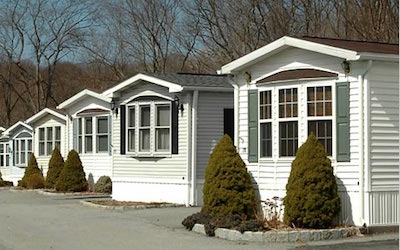
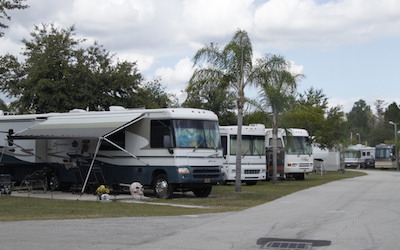
So, what sectors of real estate really have the ability to produce big rates of return? Well, right out of the chute, mobile home parks have the highest rate of return. Typical mobile home park target is over 20% cash on cash return. That's higher than what Warren Buffett made to make him the richest man in America. He averaged 19.7%, but of course he did it for 60 straight years. But a mobile home park has the ability to hit that 20% and up threshold. So does a good RV park deal, properly bought. But even within all of the other types and sectors and niches of real estate, you will find deals that have the ability to get you to 20% and greater. But stop looking at deals that make these tiny amounts: 4%, 5%. All of these different options you probably get in the email of, "Oh yeah, you can buy this existing Walgreens building and it's got a built-in return of 6.2%." What good is that gonna do you in a modern taxation world? When people are taking away larger percents of your money, there's no way that's gonna work because that's your pre-tax yield. That's the same problem you're gonna see in the not too distant future with the other forms of investing like stocks and bonds.
Look at the stock market just as an example. Assuming it continues on with its lifetime average of 10% a year, you gotta remember that you're gonna pay out of that 10% tax. And let's just assume the first round of rate increases takes them to 50. That means out of your 10% you're down to five. You take away inflation, you made nothing. The only way you're gonna be able to battle the tax man in the years ahead is to only invest in things that have really high rates of return. So when you're looking at commercial real estate and wondering what should I invest in, the most important thing you should be investing in is things that can produce very high rates of return. And with any segment of real estate, the focus needs to be on one major overriding item, what can make the most money? This is Frank Rolfe with the Commercial Real Estate Mastery podcast. Hope you enjoyed this. Talk to you again soon.