Commercial Real Estate Mastery: Episode 43
What Lobster And Trailer Parks Have In Common


Lobster was once as poorly thought of as trailer parks, and then rose in popularity into a staple of fine dining. Meanwhile, trailer parks have had a similar trajectory of “white trash” to “the gold-standard of housing investing”. In this Commercial Real Estate Mastery podcast we’re going to explore why lobster and mobile home parks share a similar life story.
Episode 43: What Lobster And Trailer Parks Have In Common Transcript
Back in the 1600s, lobster was only eaten by prisoners, servants, and livestock. It was considered a trash food that no self-respecting person would ever eat of their own free will. But by 1900, 300 years later, it was considered exotic, precious, and highly desirable. That's what lobster did, and that's what trailer parks have done as well. This is Frank Rolfe with the Commercial Real Estate Mastery podcast. We're gonna talk about how lobsters and trailer parks both went from rags to riches. Let's start off with lobster. Now, lobster truly was considered, if you look it up, you'll see that lobster was something that nobody ate. It was a way of sustaining people at the lowest possible cost, but no one who could afford better would ever eat lobster. So how did it ever turn it around? If everyone in the world knew you don't eat lobster, how do you fix that? Well, the first one is the railroads, when people built the transcontinental railroad system in America, they had to have something to feed people on the trains, and lobster, because it was so poorly thought of, it was super cheap. So a lot of railroad travelers were the first people to be introduced to lobster in the US.
And then during the tourism boom of the 1900s, a lot of these trains and people who went across America, they came to find out that lobster came from New England, and suddenly it became kind of stylish to say you were into lobster because it meant that you were well-traveled. So it started to get a little tinge of classiness. And then suddenly the lobster industry, as the railroads served more lobster, lobster supplies became much tighter. They had over-farmed lobster, and suddenly with scarcity, supply and demand meant people thought this is a much more valuable food item. Kind of hard to get lobster, so as a result, lobster became more in vogue. And then eventually lobster, because so many people wanted lobster and the supply of lobster became smaller, it started showing up at fine dining restaurants on the menu. People became proud to offer lobster, something that nobody wanted back in the earliest days. And now suddenly everyone wanted some lobster, and they were ordered up on those menus.
Another thing that propelled lobsters forward were improvements in the canning methods to keep lobster fresh. Because one issue with lobster, and the reason people didn't like to eat it hundreds of years ago, is that lobster apparently goes bad faster than almost any other seafood. So as a result, apparently a lobster, when you kill a lobster, it injects some kind of chemical into its meat that makes it taste bad. So they realized that the only way to make lobster palatable was to boil 'em, just drop them fully alive into boiling water, because that was the only way to preserve the meat from whatever this chemical issue is. And once they perfected this way to cook it, they also perfected how to can it to keep the meat fresh and decent tasting. And then finally, you had a lot of people, a lot of the Gilded Age top businessmen like Diamond Jim Brady, they were huge on lobster. He would bring his own lobster in his railroad cars. That's what a lot of the private equity guys of the 1800s had, is they would have their own special railroad cars with their own dining rooms built in. And many of them liked lobster so much, they would bring their own supply of lobster across America with them. And people wanted to be like Diamond Jim Brady. They wanted to say, "Oh, yes, I know all about lobster. I had lobster the other day." And that's how lobster went from a junk product to being highly desirable.
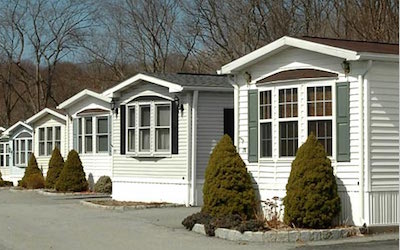
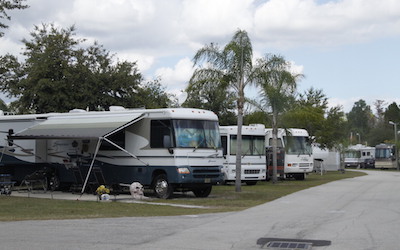
So how did trailer parks do it? We all know that when you hear the word trailer park, what do you think? You think sex, you think violence, you think trashy people, right? And that's how it was for the longest time. For almost a 50-year period, that is kind of a corresponding result that when you hear the word trailer park, people would recoil. They would say, "Oh, gosh, I don't know if I want to get involved in that." But once again, like lobster, it all revolved around supply and demand. There's 10 times more apartments in the United States than there are trailer parks. And there's 600,000 units a year of apartments being constructed, and there's a negative number of mobile home parks being constructed. So as a result, like lobster, trailer parks have become scarce. There's only 44,000 of them total in the United States. There's 5.5 million apartment complexes. So it's an entirely different thing from a supply-demand perspective when you say you're in the trailer park business than when you're in any other niche of real estate.
And just like the customers like Diamond Jim Brady and other wealthy people who started eating the lobster and making lobster seem good, you had all these famous people start buying into mobile home parks in recent times. Sam Zell, the only guy in American history to be number one in three different asset classes, largest owner of apartments and office buildings, also became the largest owner of mobile home parks. Warren Buffett of Berkshire Hathaway fame, what did he buy? He bought up Clayton Homes, a mobile home manufacturer. Even Bill Pulte of Pulte Homes, right now in Trump's cabinet, he also is apparently a mobile home park owner. Many high-profile people, many of which don't announce it for themselves, are actually behind the scenes owning trailer parks. And that has allowed trailer parks to become a desirable commodity again. But there's even more to that. Right now in America, about 8% of all apartment loans are in default. Less than 1% of mobile home parks are in default. Why is that? Because the very thing that propelled mobile home parks into a positive spin today is what made it where you couldn't build anymore. It was the stigma against mobile home parks that led to a complete shutdown of the ability to get permits from cities and counties and small towns nationwide. And that's what thrust mobile home parks in this enviable position where you have constant growing demand for affordable housing coupled with actually diminishing supply.
There's more mobile home parks in America that are torn down every year for redevelopment than are built. They're basically like an endangered species. And by having a limited supply and a growing demand, that makes everything work so much better. It makes rents go up, it makes occupancy excel, it makes loan defaults go to nearly zero. And it has made mobile home parks, known formerly as trailer parks, very, very desirable. Now, lobsters have never shut down. Lobsters are as desirable today as they were starting in the 1900s. They've had almost a 130-year run of good fortune. Mobile home parks, of course, are newer. They're just starting their adventure of being at the high end of real estate investment. But I don't really see that changing much. The supply never will change, and the demand is only accelerating as America navigates very, very tough economic times. This is Frank Rolfe with the Commercial Real Estate Mastery podcast. Hope you enjoyed this. Talk to you again soon.